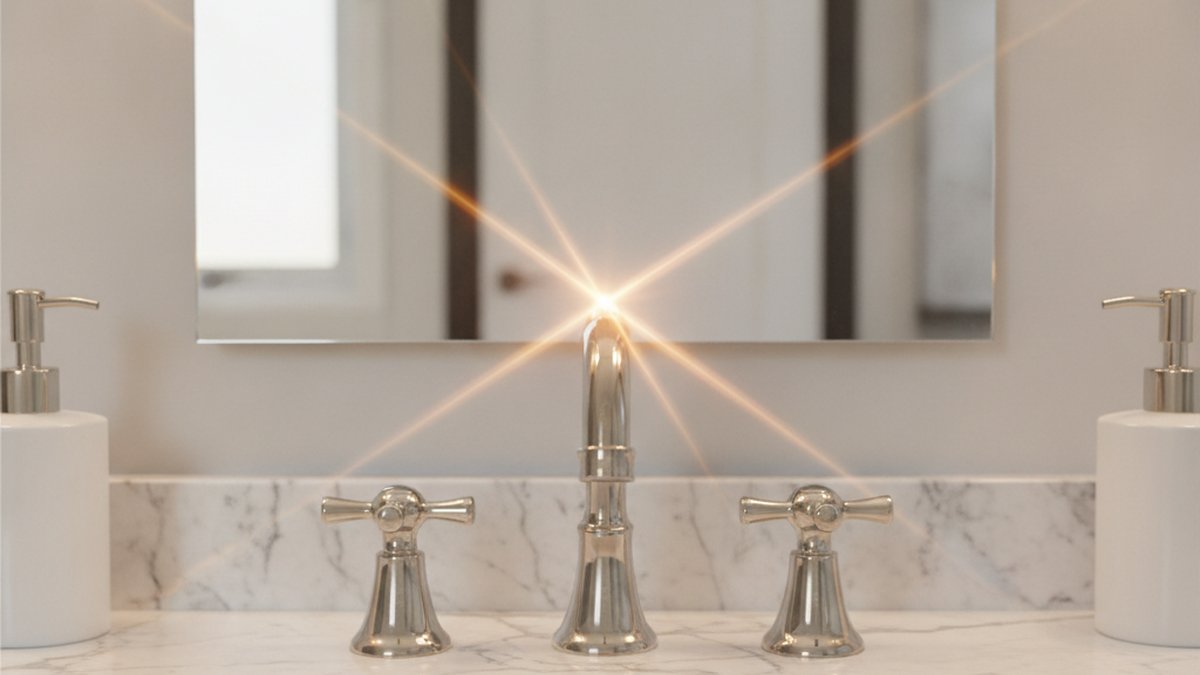
If you’ve been searching for a polished nickel bathroom faucet moen makes, you’re likely weighing two things at once: does polished nickel actually look as good in real life as it does in the showroom, and is Moen’s version worth the premium over a cheaper chrome or “satin nickel” lookalike? Short answer — yes on both counts, with one caveat about price and one about cleaning. Below, we’ll walk through the exact Moen models available in polished nickel, how the finish holds up to real bathroom life, what you’ll pay, and how to pick the right spread and handle style for your sink.
We sell and install fixtures for a living at Vevetta, so this isn’t a spec-sheet regurgitation — it’s what we tell customers standing at the counter deciding between finishes.
What exactly is polished nickel, and how is it different from chrome or satin nickel?
Polished nickel is a warm, slightly golden-silver mirror finish — think of it as chrome with the “cold blue” taken out and a touch of warmth added. It is not the same as satin (brushed) nickel, which is matte and gray, and it’s not chrome, which is brighter, cooler, and more of a mirror.
Here’s the practical way to tell them apart. Hold a polished nickel faucet next to a chrome one under a white light: chrome looks bluish and clinical; polished nickel looks warmer, almost like old silverware. Satin nickel sits in a different category entirely — it’s brushed to a low sheen, so it reads soft and matte rather than reflective. All three are technically “nickel or chrome over brass,” but the top layer and the buffing are what change the look.
- Polished nickel — warm, reflective, silvery-gold. Hides water spots better than chrome. Premium price.
- Chrome — bright, cool, mirror-like. Cheapest, most common, shows every water spot.
- Satin/brushed nickel — matte, gray, forgiving of fingerprints. Mid-price.
Why does Moen matter here specifically? Because a “polished nickel” finish is only as good as the plating underneath. Cheap import faucets often use a thin flash of nickel that clouds or flakes within a couple of years. Moen’s polished nickel is a genuine multi-layer electroplate over solid brass, backed by their Limited Lifetime Warranty on finish and function for residential use — so if it tarnishes or peels, that’s on them, not you.
Which polished nickel Moen bathroom faucet should you actually buy?
For most bathrooms, buy the Moen Weymouth (traditional) or the Moen Brantford (transitional) in polished nickel — both are widely stocked, both come in centerset and widespread versions, and both use Moen’s reliable long-lasting cartridge. If your style is more modern, the polished nickel options thin out fast, because the finish reads traditional by nature.
The reason polished nickel pairs so well with traditional and transitional faucets is the warmth. It flatters cross handles, lever handles with a slight curve, and gooseneck spouts. On a hard, angular ultra-modern faucet, chrome usually looks more “correct.” So Moen concentrates its polished nickel offering in the lines where the finish belongs.
| Moen model (polished nickel) | Style | Configuration | Typical price | Best for |
|---|---|---|---|---|
| Weymouth | Traditional | Widespread (8") & centerset | $260–$420 | Classic, marble-top, cross-handle vanities |
| Brantford | Transitional | Widespread, centerset, single-hole | $180–$340 | Homes that blend modern & classic |
| Belfield | Traditional | Widespread | $280–$400 | Formal powder rooms |
| Wynford | Traditional/luxury | Widespread, high-arc | $350–$500 | Statement master baths |
Prices swing with the configuration. A single-hole or centerset faucet (one 4-inch base) always costs less than a widespread (three separate pieces spaced 8 inches apart), because the widespread uses more metal and more valving. Don’t buy a widespread just because it looks fancier — buy the one that matches the holes already drilled in your sink or countertop.
Does polished nickel show water spots and fingerprints in a real bathroom?
Yes, but noticeably less than chrome — and far less than any black or matte finish. Polished nickel’s slight warmth and depth camouflage the light mineral film that hard water leaves behind, so you’ll wipe it down less often and it’ll look presentable longer between cleanings.
That said, “less” is not “never.” If you have genuinely hard water (over ~120 mg/L, or 7 grains per gallon), you’ll still get some cloudy spotting over a week or two. The good news is polished nickel is easy to keep bright: a soft cloth, warm water, and a drop of dish soap is enough for weekly upkeep. For stubborn mineral crust, the same gentle approach that works on other reflective finishes applies — never reach for abrasive powders, scouring pads, or acidic descalers left to sit, because those can dull the plating over time.
If your area is hard on fixtures, it’s worth reading up on how mineral buildup attacks finishes before it becomes a problem — our guide on how to clean sink faucet head buildup covers what actually dissolves hard-water crust without ruining the surface, and it applies directly to a polished nickel spout and aerator. And if you’re cross-shopping darker finishes, our piece on getting hard water stains off a black faucet shows exactly why polished nickel is the more forgiving choice in a hard-water home.
How do you keep a polished nickel finish looking new for years?
Wipe it dry after heavy use, clean weekly with mild soap and water, and never use abrasive or ammonia-based cleaners. That’s the whole routine.
The enemy of any bright plated finish isn’t water — it’s what’s dissolved in the water and what’s in your cleaning cabinet. Glass cleaners with ammonia, bathroom sprays with strong acids, and “magic” abrasive pads all micro-scratch or etch the top layer. Over years, that’s what turns a mirror finish hazy. Stick to soft cloths and gentle soap and a polished nickel Moen faucet will still look sharp a decade in — which is exactly the durability their finish warranty is betting on.
Polished nickel vs. chrome: is the Moen premium worth the extra money?
If you’re spending most of your day looking at the faucet — a master bath or a powder room guests see — polished nickel is worth the roughly $60–$150 premium over chrome. For a kids’ bathroom or a rental, chrome makes more financial sense and no one will fault you.
Think of it as a visible-vs-utility decision. Polished nickel earns its cost where the room is meant to feel warm and finished: it pairs beautifully with marble, warm woods, brass hardware, and classic tile. Chrome is the value workhorse — bright, tough, cheap, and it goes with everything cool-toned. Neither is “better” in a vacuum; they’re better for different rooms.
| Factor | Polished nickel (Moen) | Chrome (Moen) |
|---|---|---|
| Look | Warm, silvery, luxe | Bright, cool, clean |
| Hides water spots | Better | Worse |
| Price | Higher (premium finish) | Lower (value) |
| Best room | Master bath, powder room | Kids’ bath, rental, utility |
| Warranty | Limited Lifetime (finish + function) | Limited Lifetime (finish + function) |
One more thing worth knowing: polished nickel holds its resale appeal. It’s a “timeless” finish that doesn’t date the way some trend colors do, so in a home you may sell, it’s a safer aesthetic bet than a bolder finish. If you love warm metals but want something even more character-driven, an unlacquered copper faucet is the finish that ages and patinas on purpose — a very different philosophy from polished nickel’s stay-bright approach, and worth a look before you commit.
What do you need to check before you install a polished nickel Moen faucet?
Before you buy, confirm three things: how many holes your sink has, the spacing between them, and whether the faucet’s valve type matches your comfort level with installation. Get these wrong and even the prettiest faucet won’t fit.
- Hole count & spread. Single-hole faucets need one hole. Centerset needs three holes 4 inches apart on a shared base plate. Widespread needs three separate holes 8 inches apart. Measure center-to-center on the outer holes.
- Deck vs. wall mount. Almost all Moen bathroom faucets are deck-mounted (on the sink or countertop). Confirm yours isn’t a wall-mount vanity.
- Supply lines & shutoffs. Check that your under-sink shutoff valves work and that your supply lines reach. If they’re short or old, replace them while you’re in there.
- The cartridge. Moen bathroom faucets use a replaceable cartridge that controls flow and temperature — the single most important part for long-term reliability. Know which one your model takes.
That last point matters more than people realize. A faucet’s finish is what you see, but the cartridge is what determines whether it drips in three years. Moen’s cartridges are widely available and cheap to swap, which is a big reason their faucets last. If you’re not sure what that part even does, our explainer on the purpose of a faucet cartridge is a five-minute read that will save you a service call later.
Installing a widespread faucet is a bit more involved than a centerset because you’re connecting three separate pieces under the deck, but it’s still a confident-DIYer job — figure 45–90 minutes with basic tools. If you’re going with a widespread and want to see how a comparable three-piece install goes on a real vanity, our walkthrough on choosing a single-hole faucet in champagne bronze covers the deck-prep and hole logic that carries straight over to a polished nickel widespread.
Can you install a widespread polished nickel Moen faucet yourself?
Yes — a widespread install is a reasonable DIY project if you can reach the underside of your sink and turn a wrench. The three-piece layout looks intimidating but each piece connects with the same logic.
The core steps: shut off the water, disconnect and remove the old faucet, drop the new spout and two valve bodies through their holes, connect the hot and cold supply tubes to each valve, link the valves to the spout underneath, then reconnect your supply lines and test for leaks. The one place people get tripped up is over-tightening the plastic mounting nuts and cracking them — hand-tight plus a gentle quarter-turn is enough. If your shutoff valves are seized or your supply lines look corroded, that’s the moment to replace them rather than fight them.
How much should you budget for a polished nickel Moen bathroom faucet in 2026?
Budget $180–$500 for the faucet itself, with the sweet spot for a quality widespread landing around $260–$340. Add $20–$40 if you need new supply lines and a fresh pop-up drain assembly, which you often do on an older sink.
Here’s how the money breaks down so there are no surprises at checkout:
- Faucet: $180 (centerset/single-hole) to $500 (luxury high-arc widespread).
- Supply lines: $8–$20 for a good braided stainless pair.
- Drain assembly: Usually included with the faucet, but a matching polished nickel pop-up drain runs $25–$50 if bought separately.
- Plumber (optional): $120–$250 for professional installation if you’d rather not DIY.
Skip the temptation to save $40 on a no-name “polished nickel” faucet from an unfamiliar brand. The finish on those is where they cut corners, and a clouded or peeling spout on a bathroom you look at every day is a false economy. The whole point of paying for a Moen in this finish is the plating quality and the lifetime finish warranty behind it.
Author note & why trust Vevetta
This guide was written by the Vevetta fixtures team — people who spec, sell, and install bathroom and kitchen faucets every week, not a generalist blog. We handle polished nickel, chrome, brushed gold, and matte black finishes across dozens of installs, so our finish recommendations come from what actually holds up in customers’ homes, not from marketing copy.
On the standards side: reputable bathroom faucets sold in North America are built to ASME A112.18.1 / CSA B125.1 for plumbing fittings and certified to NSF/ANSI 61 and 372 for lead-free “drinking water safe” compliance. Moen’s residential faucets carry their Limited Lifetime Warranty covering both finish and function — always register your faucet and keep the receipt so a warranty finish claim is painless. When you buy from Vevetta, we point you toward configurations that match your sink’s real hole pattern, so you’re not returning a faucet that never fit in the first place.
FAQ
Is polished nickel the same as satin or brushed nickel?
No. Polished nickel is a warm, reflective, mirror-like finish, while satin (brushed) nickel is matte and gray with a low sheen. They’re both nickel plating, but the buffing is completely different — polished shines, brushed does not. If you want the softer, fingerprint-hiding look, choose brushed nickel; if you want warmth and shine, choose polished nickel.
Does Moen make a lot of faucets in polished nickel?
Moen offers polished nickel mainly in its traditional and transitional lines — Weymouth, Brantford, Belfield, and Wynford are the common ones. It’s a premium finish, so the selection is narrower than chrome or brushed nickel, and you’ll rarely find it on ultra-modern designs because the warm finish suits classic shapes better.
Will a polished nickel faucet tarnish over time?
A genuine Moen polished nickel finish shouldn’t tarnish or peel under normal use — that’s exactly what the Limited Lifetime finish warranty covers. What can dull it is harsh cleaning: abrasive pads, ammonia glass cleaners, and acidic descalers left to sit. Stick to mild soap, warm water, and a soft cloth and it stays bright for years.
Is a polished nickel Moen faucet worth the extra cost over chrome?
In a master bath or powder room you look at daily, yes — the warmth and spot-hiding are worth the roughly $60–$150 premium. In a kids’ bathroom or rental, chrome is the smarter value. Both finishes carry the same lifetime warranty, so it’s purely an aesthetics-and-budget call, not a durability one.
What size faucet do I need — centerset or widespread?
Match the faucet to your sink’s existing holes. If your three holes are 4 inches apart on a shared base, buy centerset. If they’re 8 inches apart as separate holes, buy widespread. If there’s a single hole, buy a single-hole faucet. Measure center-to-center on the outermost holes before ordering.
Does polished nickel go with gold or brass fixtures in the same bathroom?
Yes — polished nickel’s warmth lets it mix comfortably with brass, gold, and warm woods, which is why designers pair it in classic and transitional bathrooms. It clashes less than cold chrome does with warm metals. Just try to keep your faucet, drain, and cabinet hardware in coordinating tones so the room reads intentional.