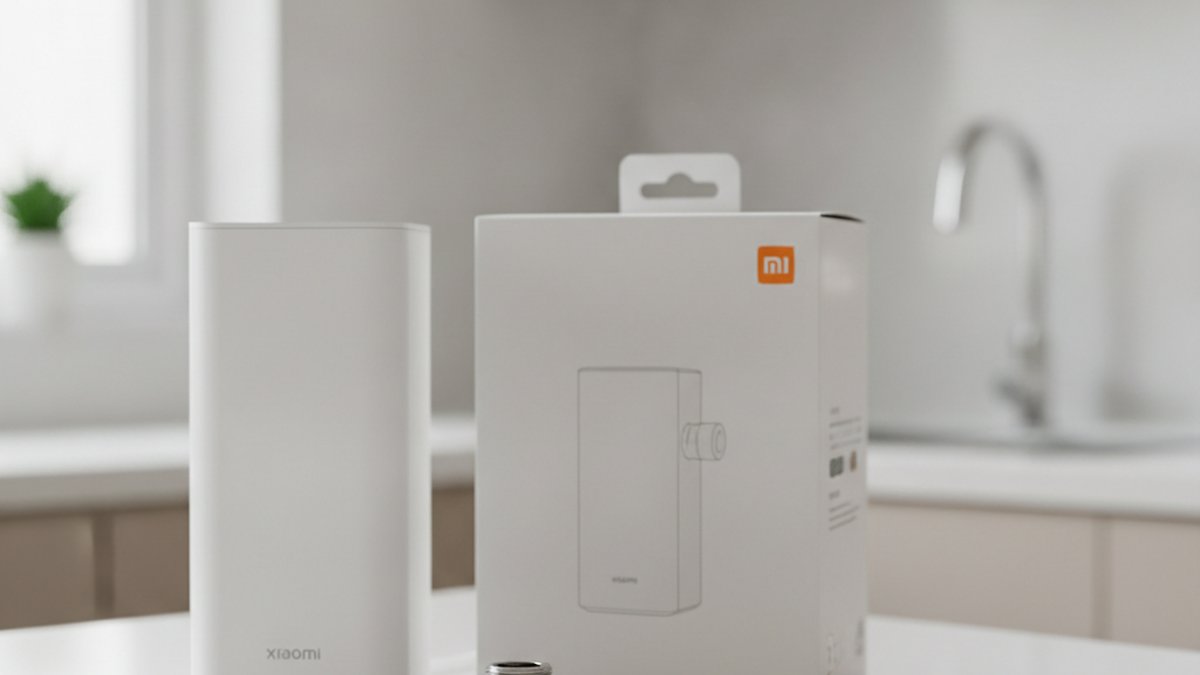
If you just bought a Mijia water purifier and it won’t screw onto your kitchen tap, you’re not alone — the single most common reason a xiaomi faucet adapter “doesn’t fit” is a thread mismatch between Xiaomi’s included adapters and the real-world faucet already installed in your home. The good news: the fix is almost always cheap, and once you understand the two or three thread standards involved, choosing the correct adapter takes about five minutes. This guide walks through exactly what these adapters are, how to measure for one, and which option to buy for your specific faucet.
At Vevetta we sell and test faucet connectors, aerators, and adapters across dozens of tap brands, so we see the same compatibility questions over and over. Below is the practical, no-fluff version.
What is a Xiaomi faucet adapter, and what does it actually do?
A Xiaomi faucet adapter is a small threaded connector — usually brass or reinforced plastic — that lets a Xiaomi/Mijia faucet water purifier (or smart faucet accessory) screw onto the tip of your existing faucet where the aerator normally sits. In plain terms: it’s the translator between your tap’s thread and Xiaomi’s inlet.
Here’s what’s happening mechanically. Almost every modern faucet has a removable aerator at the tip — that little mesh screen that mixes air into the water so it doesn’t splash. You unscrew that aerator, and underneath is a thread. Xiaomi’s purifier needs to grab onto that thread, but faucet threads come in several sizes and in two “genders” (male/external and female/internal). The adapter set exists so one purifier can fit the widest range of taps.
The Xiaomi box typically includes:
- A 22mm male (external) adapter — fits the most common faucets where the thread is on the outside of the spout.
- A 24mm female (internal) adapter — fits faucets where the thread is recessed inside the spout tip.
- Rubber gaskets/O-rings — these do the actual sealing; a missing or pinched gasket is the #1 cause of drips.
If your faucet matches one of those two, you don’t buy anything extra — you just use the ring Xiaomi already gave you. The trouble starts when your faucet uses a non-standard thread, which is where a dedicated aftermarket adapter comes in.
Will a Xiaomi faucet adapter fit my faucet? (How to measure in 2 minutes)
It fits if your faucet’s aerator thread is 22mm male or 24mm female — the two sizes Xiaomi covers out of the box. To find out, unscrew your current aerator and measure the thread diameter with a caliper or a printable thread gauge. That single measurement decides everything.
Do it in this order:
- Unscrew the aerator at the tip of your faucet (turn counterclockwise as you look up at it). If it’s stuck with hard-water crust, soak the tip in white vinegar for 20–30 minutes first — the same trick that works for removing hard-water buildup from a sink faucet head.
- Look at where the thread lives. Threads on the outside of the spout = male (external). Threads hidden inside the spout = female (internal).
- Measure the diameter across the threads with calipers. 22mm male and 24mm female are the two standard “regular” sizes. 21mm and 18mm show up on some compact and European faucets.
- Match to the Xiaomi ring. If your number matches, use the included adapter. If it doesn’t, you need a step-up or step-down adapter (details below).
One caution people miss: pull-down and pull-out kitchen sprayers usually can’t take a faucet-mounted purifier at all, because the spray head detaches and there’s no fixed thread to mount to. Xiaomi purifiers are designed for fixed-spout kitchen and bathroom taps.
Which Xiaomi faucet adapter should you buy for your specific tap?
Buy based on your measured thread: if you’re 22mm male or 24mm female, use the in-box adapter and buy nothing; if you’re anything else, buy a brass M22/M24 conversion adapter that steps your odd thread to the size Xiaomi expects. Here’s the quick-reference table we give customers.
| Your faucet thread | What you need | Where it comes from | Typical cost |
|---|---|---|---|
| 22mm male (external) | Included Xiaomi 22mm adapter + gasket | In the purifier box | $0 (included) |
| 24mm female (internal) | Included Xiaomi 24mm adapter + gasket | In the purifier box | $0 (included) |
| 18mm or 21mm (small/EU) | Brass step adapter to 22mm/24mm | Aftermarket / hardware store | $4–$9 |
| Non-threaded or proprietary spout | Universal rubber push-on adapter | Aftermarket | $6–$12 |
| Pull-down / pull-out sprayer | Not compatible — use under-sink filter instead | — | N/A |
A few buying tips that save headaches:
- Choose brass over plastic for the adapter body if you have hard water. Plastic threads strip and crack over time; brass lasts for years and reseats cleanly when you change filter cartridges.
- Buy a kit with multiple gaskets. The washers wear out faster than the metal. Spares are pennies and prevent a slow drip six months later.
- Confirm the purifier model. Xiaomi has sold several generations of Mijia faucet purifiers; the mounting collar is consistent, but always match the adapter thread to the collar spec printed in your manual.
If you’re also rethinking the aerator itself while you’re in there, it’s worth reading our guide on the Neoperl faucet aerator upgrade — a better aerator plus a purifier gives you both flow control and cleaner water.
How do you install a Xiaomi faucet adapter without leaks?
Install it hand-tight with the gasket seated flat, then check for drips at full pressure — no tools required, and over-tightening is what usually causes leaks, not under-tightening. The whole job takes under ten minutes.
Step by step:
- Remove the old aerator and clean the exposed thread. Wipe away grit and any old plumber’s tape.
- Seat the rubber gasket inside the correct adapter (22mm or 24mm). It should sit flat, not tilted. This gasket is what actually seals the joint — the threads just hold pressure.
- Screw the adapter onto the faucet thread by hand. Turn until it’s snug plus about a quarter turn. If it’s cross-threading (feels gritty or crooked), back it all the way off and start again — forcing it strips the thread.
- Click or thread the Xiaomi purifier onto the adapter. Most Mijia units use a quick-connect collar that locks with a light twist.
- Turn the water on slowly and watch the joint. A drip means the gasket isn’t seated or you over-tightened and deformed it — loosen, reseat, retry.
If your faucet tip is corroded or the thread is chewed up, don’t fight it with the adapter — that’s a sign the aerator housing itself needs attention. In stubborn cases you may want the right kitchen faucet installation tool to grip and free a seized aerator without rounding off the housing.
Do you even need a faucet adapter, or should you get an under-sink filter instead?
You need the faucet adapter route if you want a cheap, renter-friendly, no-plumbing filter you can install in minutes; go under-sink instead if you have a pull-down sprayer, want higher flow, or plan to filter permanently. It’s a genuine fork in the road, so decide before you buy.
The faucet-mounted Xiaomi purifier with an adapter is the right call when:
- You rent, or you don’t want to touch the plumbing under the sink.
- Your faucet has a standard fixed spout with a 22mm/24mm thread.
- You want to switch between filtered and unfiltered water with a lever on the unit.
- Budget matters — the whole setup is a fraction of an under-sink reverse-osmosis system.
An under-sink system makes more sense when you have a detachable sprayer (no thread to mount to), when you want maximum flow rate for filling pots, or when you’re specifically targeting contaminants like fluoride that faucet-mounted units may not fully address. If fluoride removal is your goal, read our breakdown of a tap water filter that removes fluoride before committing — not every faucet purifier does what people assume it does.
Why does a Xiaomi faucet adapter leak or fall off, and how do you fix it fast?
Nine times out of ten a leak is a gasket problem — missing, pinched, cross-seated, or worn — not a thread problem, so start by pulling the joint apart and inspecting the rubber. Fixing it usually costs nothing.
Run through this checklist in order:
- Gasket present and flat? Re-seat it. A gasket that’s cocked at an angle leaks instantly.
- Over-tightened? Back it off a quarter turn. Crushing the gasket deforms it and creates a leak path.
- Right adapter for the thread? A 22mm ring spun onto a 24mm thread will grab a couple of turns and then weep — this feels like “it’s on” but it isn’t sealed.
- Debris in the thread? Grit or old tape keeps the gasket from sitting flush. Clean and retry.
- Worn gasket? After a year or a few cartridge changes, swap in a fresh washer. This is why we tell people to buy the multi-gasket kit.
If the adapter keeps popping off under pressure, your home’s water pressure may be high (above ~60 psi), which stresses push-on and quick-connect joints. A brass threaded adapter handles pressure far better than a plastic snap-on collar in that situation.
Xiaomi faucet adapter vs. universal faucet adapter — which is the better buy?
If your thread matches Xiaomi’s included rings, the in-box adapter is the better buy because it’s free and purpose-fit; if your thread is odd, a good universal brass adapter beats hunting for a Xiaomi-branded part. Here’s the honest comparison.
| Factor | Included Xiaomi adapter | Universal aftermarket adapter |
|---|---|---|
| Cost | Free (in box) | $4–$12 |
| Thread coverage | 22mm male / 24mm female only | 18mm–24mm, male and female |
| Material | Often plastic | Brass options available |
| Best for | Standard US/global taps | EU, compact, or non-standard taps |
| Longevity in hard water | Moderate | High (brass) |
Bottom line: don’t buy an adapter you don’t need. Measure first. The paid route only makes sense when Xiaomi’s two included sizes genuinely don’t match your faucet.
FAQ
What thread size is a Xiaomi faucet adapter?
Xiaomi Mijia faucet purifiers ship with adapters for the two standard aerator threads: 22mm male (external) and 24mm female (internal). These cover the majority of kitchen and bathroom faucets worldwide. If your faucet uses an 18mm or 21mm thread — common on some European and compact taps — you’ll need an inexpensive brass step adapter to convert it to 22mm or 24mm.
Will a Xiaomi faucet adapter fit a pull-down kitchen sprayer?
No. Pull-down and pull-out sprayers have a detachable spray head with no fixed thread to mount a purifier onto, so faucet-mounted Xiaomi units aren’t compatible. For those faucets, an under-sink filter is the correct choice because it taps into the supply line rather than the spout.
Why is my Xiaomi water purifier leaking at the adapter?
The leak almost always comes from the rubber gasket — it’s missing, pinched, seated at an angle, or over-compressed from over-tightening. Take the joint apart, seat a flat gasket, and hand-tighten to snug plus a quarter turn. If it still leaks, confirm you’re using the adapter size that matches your thread (a 22mm ring won’t seal on a 24mm thread).
Can I use a Xiaomi faucet adapter on a bathroom faucet, not just the kitchen?
Yes, as long as the bathroom faucet has a fixed spout with a standard 22mm/24mm aerator thread. Many bathroom faucets use smaller threads or have low-flow aerators that reduce the purifier’s output, so measure the thread and check your flow rate before mounting one there.
Do I need plumber’s tape (PTFE) on a Xiaomi faucet adapter?
Generally no — these adapters seal with a rubber gasket, not with thread tape, so adding PTFE can actually prevent the gasket from seating flat. Rely on the gasket. Only consider a wrap of tape if the thread is slightly worn and you’re getting a persistent weep that reseating doesn’t cure.
How long does a Xiaomi faucet adapter last?
The metal or plastic body can last for years, but the gasket is the wear item and typically needs replacing every 12–18 months or after several filter-cartridge changes. Buy a small pack of spare gaskets up front — they cost pennies and are the difference between a dry joint and a slow drip.
A note on testing, standards, and who wrote this
This guide was written by the Vevetta fixtures team, who source, install, and pressure-test faucet adapters, aerators, and connectors across a wide range of tap brands and thread standards. We physically test adapter fit and seal on real faucets rather than relying on spec sheets alone, because thread tolerances vary between manufacturers even when the nominal size matches. When we recommend brass over plastic for hard-water homes, it’s based on which parts come back as returns and which don’t.
A word on standards and safety: look for adapters and gaskets made from potable-water-safe materials (lead-free brass, food-grade silicone or EPDM). Reputable water-contact components are tested against drinking-water safety standards such as NSF/ANSI 372 for lead content. Xiaomi’s own purifier cartridges carry their own filtration certifications, but the adapter is a mechanical part — its job is a leak-free, safe connection, and a lead-free brass adapter with a fresh gasket is the reliable way to get there. Whatever you buy, keep the receipt and check the warranty terms; a quality adapter or purifier should carry at least a limited warranty covering defects.
Get the thread measurement right, seat a clean gasket, and hand-tighten — that’s genuinely all it takes to connect a Xiaomi purifier to almost any standard faucet.