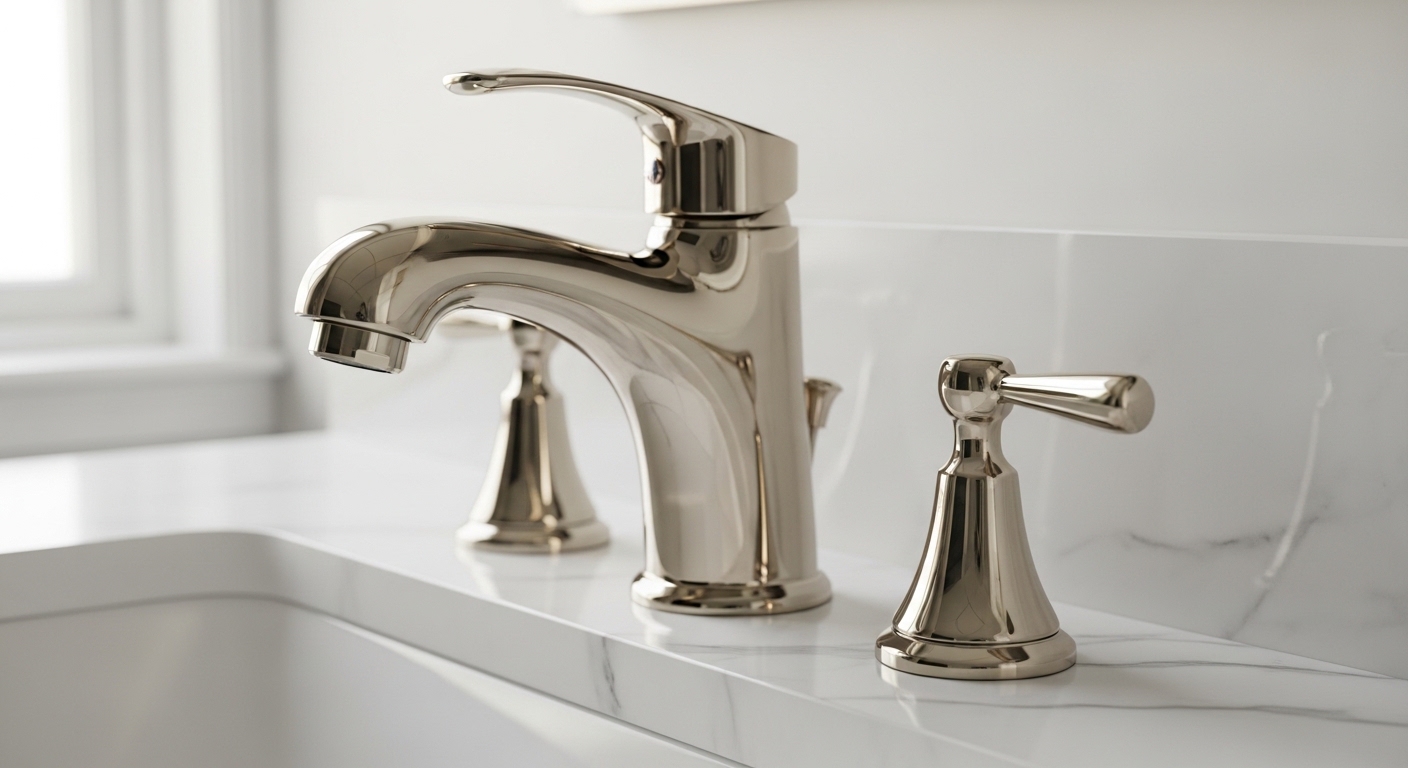
Polished nickel faucet maintenance is one of the most searched-for topics among homeowners who have invested in this premium finish — and for good reason. Polished nickel is prized for its warm, slightly golden mirror shine that flatters both traditional and modern bathrooms, but it is also a “living finish” that reacts to water chemistry, cleaning products, and daily handling more visibly than chrome. The good news: caring for it correctly takes only a few minutes a week, and the routine below will keep your faucet looking showroom-fresh for years.
At Vevetta, we manufacture and finish polished nickel faucets in-house, so this guide reflects what our finishing team actually recommends — not generic advice. Whether you own a Vevetta faucet or another brand, the principles are the same.
Why Polished Nickel Faucet Maintenance Matters
Polished nickel is an electroplated finish applied over a brass body. Unlike chrome, which has a hard, bluish, almost glass-like surface, polished nickel is softer, warmer, and slightly more porous at the microscopic level. That warmth is the whole reason people choose it — but it also means the finish interacts with its environment.
Three things affect a polished nickel faucet over time:
- Water chemistry: Hard water leaves mineral deposits; softened water with high salt content can leave a film.
- Cleaning products: Acids, ammonia, bleach, and abrasives strip or etch the finish.
- Skin oils and handling: Fingerprints show more readily on polished nickel than on brushed finishes.
None of these are problems if you maintain the faucet properly. They simply explain why the routine matters. Neglect a polished nickel faucet and you may see water spotting, a dull haze, or — in worst cases — patchy discoloration. Maintain it well and it develops nothing but a deep, even luster.
Daily and Weekly Polished Nickel Faucet Maintenance Routine
The single most effective habit is also the easiest: dry the faucet after use. Standing water is the source of nearly every cosmetic issue with polished nickel.
The Daily Wipe-Down
Keep a soft microfiber cloth near the sink. After the faucet sees heavy use — morning routine, dishwashing, kids’ bath time — give it a quick wipe to remove water droplets and skin oils. This takes about ten seconds and prevents mineral spotting before it starts. No cleaner is needed for the daily wipe; a dry or barely damp cloth is enough.
The Weekly Cleaning
Once a week, do a proper clean:
- Mix a few drops of pH-neutral dish soap into warm water.
- Dampen a soft cloth or non-scratch sponge in the solution.
- Wipe the entire faucet — spout, handles, base, and the underside of the spout where film collects.
- Rinse the cloth, wring it out, and wipe again with clean water to remove all soap residue.
- Dry immediately and completely with a fresh microfiber cloth, buffing gently to restore the shine.
That is the entire core routine. Most polished nickel faucets never need anything more aggressive than this.
What Never to Use on a Polished Nickel Faucet
This is the part most people get wrong. The wrong cleaner can permanently damage a polished nickel finish in a single application. Avoid the following entirely:
- Abrasive cleaners and pads: Scouring powders, “soft scrub” creams, steel wool, and Magic Eraser-type melamine sponges all micro-scratch the finish and create a permanent haze.
- Acidic cleaners: Vinegar, lemon juice, CLR, and most commercial lime/scale removers will etch and dull polished nickel. This is a key difference from chrome, where diluted vinegar is sometimes tolerated.
- Ammonia and glass cleaners: Windex and similar products can cause discoloration over time.
- Bleach and chlorine cleaners: These can pit and stain the plating.
- Disinfecting wipes: Many contain citric acid or other acids — check the label, and rinse thoroughly if used.
When in doubt, plain warm water and a soft cloth are always safe. If you only remember one rule from this guide, make it this: no acids, no abrasives, no ammonia.
Polished Nickel vs. Other Faucet Finishes: Maintenance Comparison
If you are weighing finishes before you buy, or simply want to understand how your faucet compares, this table summarizes the real-world maintenance demands of the most common faucet finishes.
| Finish | Shows Water Spots | Shows Fingerprints | Cleaning Difficulty | Acid-Safe? | Best For |
|---|---|---|---|---|---|
| Polished Nickel | Moderate | Yes | Easy with the right routine | No | Warm, classic, transitional bathrooms |
| Polished Chrome | Yes | Yes | Easy | Mildly tolerant | Modern, budget-friendly builds |
| Brushed Nickel | Low | Low | Very easy | No | High-traffic family bathrooms |
| Matte Black | Low | Low (shows dust/limescale) | Easy | No | Contemporary, statement designs |
| Brushed Gold / Champagne Bronze | Low | Low | Easy | No | Warm, upscale designs |
The takeaway: polished nickel asks for slightly more attention than brushed finishes because it shows spots and prints — but it rewards that attention with a depth of shine no brushed finish can match. The maintenance “cost” is just the dry-after-use habit.
How to Remove Hard Water Spots and Mineral Buildup Safely
Even with a good routine, homes with hard water occasionally see cloudy mineral spotting. Because acids are off-limits, here is the safe method:
- Soften first: Lay a warm, wet cloth over the spotted area for five to ten minutes. Heat and moisture loosen light deposits.
- Soap and gentle pressure: Use your pH-neutral soap solution and a soft cloth, working in small circles. Do not scrub hard.
- For stubborn spots: A non-scratch nylon cloth (the type rated safe for nonstick cookware) with soapy water can be used very gently. Test in a hidden spot first.
- Rinse and dry fully.
If a mineral film keeps returning quickly, the underlying issue is your water, not your cleaning. A whole-house water softener or a point-of-use filter dramatically reduces spotting. For the aerator specifically — the screened tip of the spout — you can unscrew it and soak just that removable part in a mild solution, since the aerator is usually plastic or chrome rather than polished nickel. Never soak the faucet body.
Long-Term Protection: Keeping the Shine for Decades
Beyond cleaning, a few habits extend the life of the finish considerably:
- Optional wax protection: A thin coat of pure carnauba wax or a microcrystalline metal wax, applied two to three times a year, creates a barrier that beads water and reduces spotting. Buff to a shine with a clean cloth. This is optional but loved by people in hard-water regions.
- Mind your other products: Hairspray, perfume, acne products with benzoyl peroxide or salicylic acid, and even some toothpastes can damage the finish if they land on the faucet. Rinse any overspray promptly.
- Ventilate the bathroom: Constant high humidity accelerates spotting and tarnish. Run the exhaust fan.
- Fix leaks fast: A dripping faucet keeps the finish permanently wet, which is the fastest route to mineral staining. If yours drips, address it quickly — our guide on how to fix a leaky faucet in 10 minutes walks through the common causes.
Treated this way, a quality polished nickel faucet does not “wear out” cosmetically. The finish is electroplated and durable; what fails is almost always neglect or the wrong cleaner — both fully within your control.
When to Call a Professional or Use Your Warranty
Most polished nickel faucet maintenance is a DIY task. But a few situations warrant a call:
- Patchy discoloration or peeling plating: This is a finish defect or chemical damage, not something cleaning will fix.
- Persistent interior leaks behind the wall or under the deck.
- Cartridge or valve failure causing drips that you cannot stop with a simple cartridge swap.
Vevetta polished nickel faucets are backed by a limited lifetime warranty on both the finish and the function for the original homeowner. Finish failure under normal use and proper care is covered — which is exactly why following a non-abrasive, acid-free routine also protects your warranty claim. Keep your proof of purchase, and document any defect with photos.
Polished Nickel Faucet Maintenance: Quick Reference
To summarize the routine that keeps polished nickel faucet maintenance effortless:
- Daily: Wipe dry with microfiber after heavy use.
- Weekly: Clean with pH-neutral soap and warm water, rinse, dry, buff.
- Monthly: Check and clean the aerator; inspect for any drips.
- 2–3x per year: Optional wax coat for hard-water homes.
- Never: Acids, abrasives, ammonia, bleach, or melamine sponges.
Follow that, and your faucet’s warm mirror finish will outlast most of the other fixtures in your bathroom.
Author Note & Brand Credibility
Written by the Vevetta Product & Finishing Team. Vevetta has designed and manufactured bathroom and kitchen faucets for over a decade, with an in-house finishing line where every polished nickel piece is electroplated, inspected, and salt-spray tested for corrosion resistance before it ships. Our faucets are built to lead-free standards and certified to meet NSF/ANSI 61 and 372 requirements for drinking-water safety. This guide reflects the same care instructions we include with every polished nickel faucet we sell — tested against real-world use, not theory.
FAQ
Can I use vinegar on a polished nickel faucet?
No. Vinegar is acidic and will etch and dull polished nickel, sometimes permanently after just one use. Unlike chrome, polished nickel is not acid-tolerant. Stick to pH-neutral dish soap and warm water, and remove hard water spots with a warm damp cloth and gentle pressure instead.
Why does my polished nickel faucet look cloudy or hazy?
A haze is usually one of two things: mineral film from hard water that was allowed to dry on the surface, or micro-scratching from an abrasive cleaner or sponge. Mineral film can be cleaned with soap and water plus a warm-cloth soak. Micro-scratching from abrasives, unfortunately, is permanent — which is why abrasive products must be avoided entirely.
How often should I clean a polished nickel faucet?
Wipe it dry daily after heavy use, and do a full soap-and-water cleaning once a week. In hard-water homes, a quick daily dry-down matters even more because mineral deposits form fast. The aerator should be checked and cleaned about once a month.
Does polished nickel tarnish over time?
Polished nickel is a durable electroplated finish and does not tarnish like raw brass or unlacquered metals. What people mistake for tarnish is almost always mineral buildup, soap film, or chemical damage from the wrong cleaner — all preventable with proper polished nickel faucet maintenance. Some homeowners do enjoy the very subtle mellowing that gives it “living finish” character.
Is waxing a polished nickel faucet necessary?
It is optional, not required. A thin coat of carnauba or microcrystalline wax two to three times a year helps water bead off and reduces spotting, which is genuinely useful in hard-water areas. If you have soft water and a good dry-down habit, you may never need it.
What is the difference between polished nickel and brushed nickel maintenance?
Both must avoid acids and abrasives, but brushed nickel hides water spots and fingerprints far better thanks to its textured surface, so it forgives a missed wipe-down. Polished nickel shows everything, so the daily dry-down habit is more important — the trade-off being a brighter, warmer, mirror-like shine.