If you’ve searched “shower system b&q,” you’re almost certainly standing in your bathroom (or scrolling on your sofa) trying to decide whether to grab a ready-boxed shower set from the high-street DIY giant or order something more tailored online. Here’s the honest, plain-English answer: B&Q is a genuinely convenient place to buy a mid-range shower system, and for a lot of UK homes it’s the right call. But “shower system” covers everything from a bare bar mixer to a full concealed rainfall setup with body jets, and the right pick depends entirely on your water pressure, your wall type, and how long you plan to keep it. Let’s walk through it like a plumber-savvy friend would.
What exactly is a “shower system,” and what does B&Q actually sell under that name?
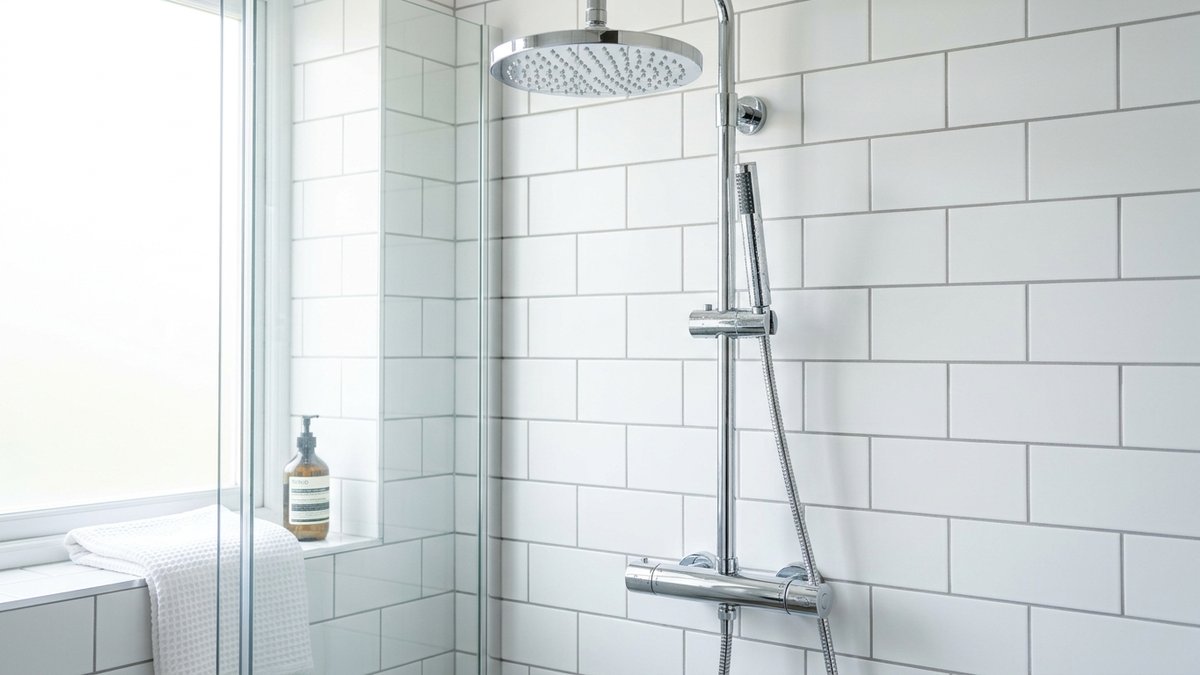
A shower system is the complete set of parts that controls and delivers your shower water — the valve, the riser rail or arm, the main shower head, and often a separate handset — sold together as one matched unit rather than pieced together. At B&Q you’ll mostly find three families: bar mixer showers (the exposed horizontal valve you screw onto existing pipe centres), thermostatic mixer showers (same idea but with anti-scald temperature control), and concealed/rigid riser systems where the valve hides in the wall and you get a fixed drencher head plus a handset.
The important thing to understand before you buy: not every “system” is a full drencher-plus-handset combo. Plenty of the cheapest boxed sets are just a bar valve with a single handset on a rail. If you want that ceiling-style downpour feeling, read the spec line for “overhead”, “fixed head”, or “rainfall” — and check its diameter. Anything under 200mm won’t give you the deluge you’re picturing. If the whole concept of matched-vs-separate parts is new to you, our explainer on what a shower nozzle system is and which one to buy breaks down the anatomy before you commit.
Will a B&Q shower system work with my water pressure?
This is the single question that trips people up most, so answer it first: most B&Q mixer shower systems need at least 1.0 bar of pressure to perform well, and many rainfall heads want 1.5–2.0 bar to actually feel like rain rather than a drizzle. If you have a gravity-fed tank system (cold tank in the loft, hot cylinder in the airing cupboard) and only a metre or two of head height, you may be disappointed unless you add a pump or pick a low-pressure-rated valve.
Here’s the quick self-check before you buy any shower system, from B&Q or anywhere:
- Combi boiler? You almost always have mains pressure (usually 1.5–3 bar) — most mixer and thermostatic systems will be happy.
- Gravity-fed tank? Measure the vertical distance from the base of your cold tank to the shower head. Under 1 metre of head = weak. Look for a “low pressure” or “0.1–0.5 bar” rated valve, or budget for a shower pump.
- Unvented cylinder (Megaflo-style)? Mains pressure and plenty of flow — nearly anything works, including big rainfall heads.
- Rainfall head specifically? The bigger the head, the more pressure and flow it needs to fill every nozzle. A 300mm square head on 0.8 bar will underwhelm you.
B&Q product pages do list a minimum bar rating, but it’s easy to miss. Match that number to your home honestly — this is the difference between a shower you love and one you replace in a year.
Bar mixer vs thermostatic vs concealed: which type should I buy?
Short answer: buy thermostatic if anyone in the house is a child, elderly, or if your water temperature swings when a tap runs elsewhere; buy a plain bar mixer if you’re on a tight budget and just replacing like-for-like; buy concealed only if you’re re-tiling and can chase the wall. Thermostatic is the sweet spot for most families because it holds your set temperature and shuts off if the cold supply fails — that anti-scald cut-off is a real safety feature, not marketing.
| Type | Typical B&Q price | Best for | Watch out for |
|---|---|---|---|
| Exposed bar mixer | £40–£110 | Straight like-for-like swaps, rentals, tight budgets | No anti-scald; temperature drifts when a tap runs |
| Thermostatic bar mixer | £90–£220 | Families, mixed users, safety-conscious homes | Cartridge is the wear part — check spares availability |
| Concealed thermostatic + rainfall | £180–£450 | Full re-tile renovations, spa-style bathrooms | Must chase the wall; harder to service later |
| Electric shower (separate category) | £70–£250 | Low pressure homes, no hot cylinder demand | Flow drops in winter; not a “mixer system” |
What finishes can I get, and which one holds up best in a hard-water UK bathroom?
For durability in hard-water areas (most of southern and eastern England), chrome and brushed nickel are the safest bets — they hide limescale better and are the easiest finishes to clean without damage. B&Q’s range leans heavily toward chrome, with a growing selection of matte black and brushed brass. Those darker and warmer finishes look stunning but show water spots and fingerprints faster, and aggressive descalers can dull them.
If you’re set on black or brass, the maintenance is entirely manageable once you know the rules — no acidic descaler soaking, just warm soapy water and a soft cloth after use. We cover the exact do’s and don’ts in our guide on getting hard-water stains off a black finish without ruining it, and the same principle applies to a black shower system. The finish is a coating; treat it gently and it lasts.
Does mounting height matter for the shower head?
Yes — get the fixed head height right and the whole system feels better. For a rainfall or drencher head, the UK sweet spot is roughly 200–300mm of clearance above the tallest user’s head, which usually lands the head around 2.0–2.1m off the floor. Too low and tall users duck; too high and the spray scatters and cools before it lands. Because so many boxed systems ship with a fixed riser, measure before you drill. Our dedicated breakdown of the right rainfall shower head height in the UK gives exact figures for different ceiling heights.
How do I install a B&Q shower system myself — and when should I call a plumber?
An exposed bar mixer swap is genuinely DIY-friendly for a confident homeowner and takes about an hour; a concealed system that needs pipework chased into the wall is a plumber’s job. The dividing line is simple: if you’re only unscrewing an old valve from existing pipe elbows and screwing on a new one, you can do it. If you’re moving pipes, chasing walls, or touching the hot cylinder, get a professional.
Here’s the basic exposed-valve process:
- Turn off the water at the isolation valves or the mains stopcock, then open the shower to drain residual pressure.
- Unscrew the old bar valve from the wall elbows. Note the pipe centres — UK standard is 150mm between hot and cold. B&Q systems are built to this, but confirm.
- Fit new fibre washers or O-rings (usually supplied) and wrap PTFE tape on threads where needed.
- Hand-tighten the valve onto the elbows, checking it sits level, then gently nip up — don’t overtighten and crack the fitting.
- Mount the riser rail bracket into tile using the right drill bit and wall plugs; drill into the tile face, not the grout line, to avoid cracks.
- Turn the water back on slowly and check every joint for weeping before you tile up or walk away.
If, after fitting, the valve drips or the temperature wanders, it’s usually the cartridge or a seal — not a whole-system fault. Before you assume the unit is faulty, work through our step-by-step on fixing a leaking shower faucet valve without calling a plumber. Nine times out of ten it’s a £10 cartridge, not a return.
Is B&Q actually cheaper than buying a shower system online?
For entry-level chrome sets, B&Q is very competitive and hard to beat once you factor in free click-and-collect and hassle-free returns. Where the maths shifts is at the mid-to-upper range: for £200–£400 you’ll often find a specialist online brand offers a heavier solid-brass valve body, a genuinely large rainfall head, a matching handset, and a longer warranty — where an equivalently priced B&Q “system” might pair a nice valve with a modest head. It pays to compare the actual head diameter, valve material, and warranty length, not just the headline price.
A few buying pointers that save money and regret:
- Check what’s in the box. “Shower system” sometimes excludes the fixed rainfall head, or includes only a wall arm, not a riser rail.
- Confirm spare-part availability. The cartridge is the part that wears out. A system whose cartridge you can rebuy in five years is worth more than a slightly cheaper one you’ll bin.
- Look at the warranty. Better brands offer 5–10 years on the valve. A 1-year warranty tells you something about expected lifespan.
- Factor delivery vs collection. Big rainfall systems are heavy; store collection can beat courier charges.
If you’d rather see how the established manufacturers stack up before committing to any retailer, our roundup of which shower system companies you should actually trust in 2026 compares build quality, valve engineering, and after-sales support across the brands you’ll see on B&Q’s shelves and online.
Do I need a matching surround or extra kit with my shower system?
You don’t need a surround, but if you’re fitting a shower system onto a stud wall or into a space without full tiling, a proper wall surround or panel keeps water out of the structure and makes cleaning far easier. It also lets you retrofit a system without a full re-tile. If that’s your situation, read what a shower system surround is and which one to buy before you drill anything — it can change your whole install plan and save you from water damage down the line.
Author note & why you can trust this guide
This guide was written by the Vevetta fixtures team — we design, test, and sell faucets and shower fittings full-time, and we handle real customer installs, returns, and warranty claims every week, so our advice comes from what actually fails and what lasts, not spec sheets alone. Every shower valve we recommend or supply is pressure-tested and built to meet UK/EU standards, including WRAS-approved materials and thermostatic anti-scald performance in line with BS EN 1111. Vevetta backs its shower systems with clear multi-year warranties and stocked replacement cartridges, because a fixture you can service is a fixture that lasts. We’re not affiliated with B&Q; this is an independent, plain-English take to help you buy the right thing once.
FAQ
Can I fit a B&Q shower system to a combi boiler?
Yes. Combi boilers deliver mains pressure (typically 1.5–3 bar), which suits nearly every mixer and thermostatic shower system B&Q sells, including most rainfall heads. Just confirm your combi’s flow rate in litres per minute can feed a large head — very big drencher heads on a low-output combi can feel weaker than expected.
Does a B&Q shower system come with the shower head included?
Usually, but not always. Most complete kits include the valve, riser rail, and handset. The large fixed rainfall head is sometimes included and sometimes sold separately, so read the “what’s in the box” line carefully before you buy — this is the most common source of buyer disappointment.
What pressure do I need for a rainfall shower system?
Aim for at least 1.5 bar for a rainfall head to feel like proper rain, and ideally 2.0 bar or more for heads over 250mm. On a gravity-fed tank system with under 1 metre of head, add a shower pump or choose a low-pressure-rated valve instead.
How long does a shower system last?
A decent thermostatic mixer system lasts 8–15 years, with the cartridge being the part most likely to need replacing along the way — often every 5–8 years in hard-water areas. Buying a system with readily available spare cartridges dramatically extends its usable life.
Is a thermostatic shower system worth the extra money over a plain mixer?
For most households, yes. The anti-scald cut-off and stable temperature are real safety and comfort benefits, especially with children or elderly users, or when someone flushing a toilet elsewhere would otherwise cause a temperature spike. The typical £50–£100 premium buys genuine peace of mind.
Can I install a shower system myself or do I need a plumber?
An exposed bar-mixer swap onto existing 150mm pipe centres is a confident DIY job of about an hour. Anything involving chasing pipes into the wall for a concealed system, moving supply pipes, or working on the hot cylinder should be done by a qualified plumber.