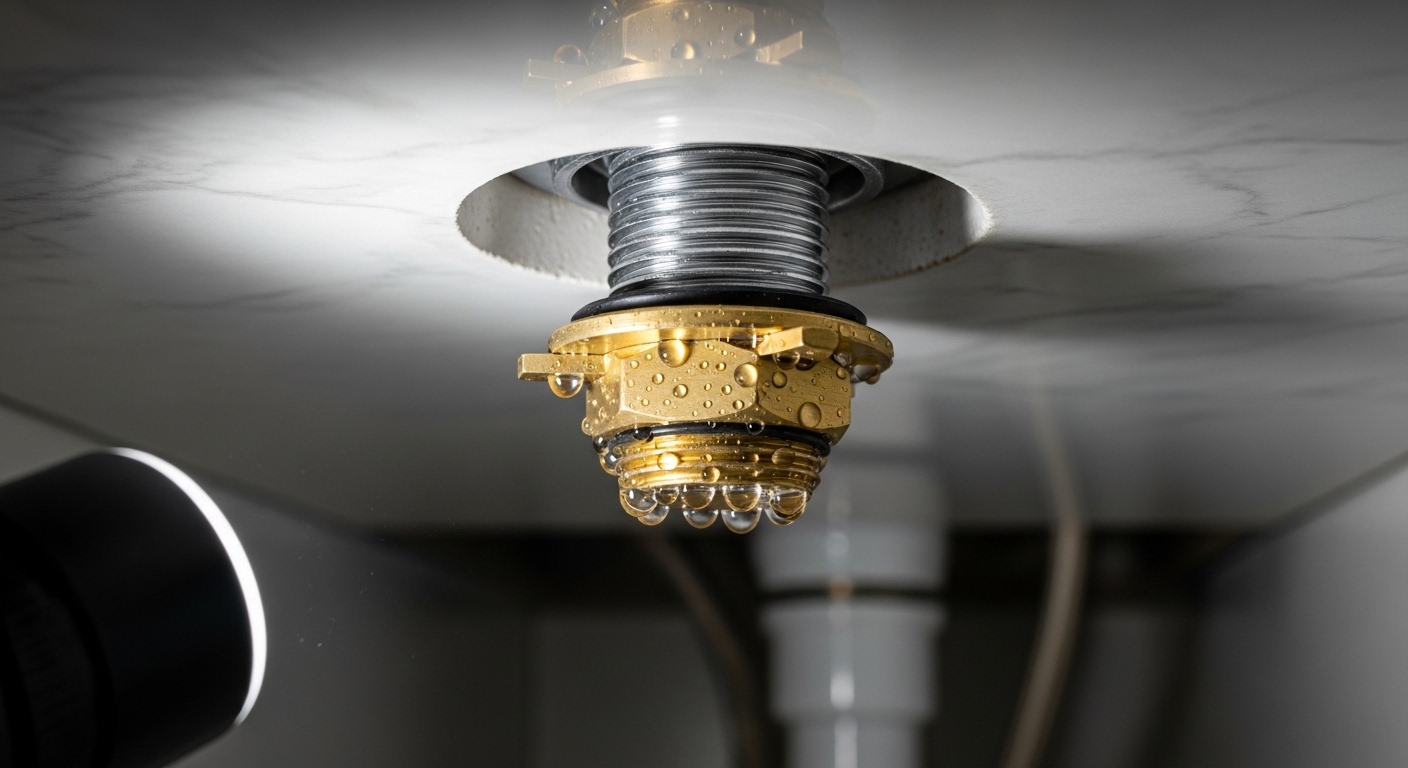
Learning how to fix leaky faucet from underneath is one of those repair skills every homeowner eventually needs, because the underside of a faucet is where gravity, vibration, and slow water creep all conspire against your plumbing. A drip coming from inside the cabinet is rarely the spout itself failing — it’s almost always the supply lines, the deck gasket, the mounting hardware, or a hairline crack in the shank. The good news: in most cases you can stop the leak in under an hour with basic tools, no plumber required, and without removing the entire faucet.
At Vevetta, we design, pressure-test, and ship kitchen and bathroom faucets to homes across North America, and our customer-care team fields thousands of “leak from below” questions every year. This guide distills the exact diagnostic flow our in-house plumbing engineers use, so you can pinpoint the failure point and fix it correctly the first time.
Why Knowing How to Fix Leaky Faucet From Underneath Matters
A faucet that drips from the spout wastes water. A faucet that leaks from underneath silently destroys your cabinet, warps your countertop substrate, breeds mildew, and — if it’s a slow drip onto a particleboard base — can lead to a thousand-dollar repair you never see coming. Underneath leaks are sneakier because the water collects in dark corners, evaporates between uses, and only reveals itself when the wood swells or a musty smell takes over the bathroom.
The other reason underneath leaks deserve their own playbook: the fix is fundamentally different from a spout drip. Spout drips are cartridge or seat-and-spring problems. Underneath leaks are connection problems. Treating them like a worn O-ring will waste your afternoon.
Step 1: Shut Off the Water and Stage Your Workspace
Before you touch anything, close both angle stops (the small oval handles on the supply pipes coming out of the wall). Turn each one clockwise until it stops. Then open the faucet handles on top to bleed off residual pressure and confirm the shutoffs actually hold — many angle stops fail silently after a decade. If water keeps trickling, you’ll need to close the main house valve.
Place a small bucket or shallow baking pan under the connections. Clear the cabinet completely; you need room to lie on your back and look up. A headlamp beats a flashlight every time because you’ll need both hands free. Lay down a folded towel — both for comfort and to catch drips you’ll inevitably create.
Tools You’ll Actually Need
- Basin wrench (the long-handled tool with a swiveling jaw — non-negotiable for faucet nuts in tight spots)
- Adjustable crescent wrench, 10-inch
- Channel-lock pliers
- PTFE thread-seal tape (plumber’s tape), white for water lines
- Food-grade clear silicone or plumber’s putty
- Replacement braided stainless steel supply lines (3/8″ compression × 1/2″ FIP is most common)
- Paper towels and a dry rag
- Phone with a camera for “before” photos of every connection
Step 2: Find the Exact Source of the Leak
This is the step most DIYers skip, and it’s why they end up replacing parts that were never broken. Dry every surface under the faucet completely with paper towels. Then turn the angle stops back on slowly — a quarter turn at a time — and watch.
There are exactly five places water can come from underneath a faucet, and each one looks different:
| Leak Location | What You’ll See | Likely Cause | Difficulty |
|---|---|---|---|
| Angle stop body | Wet stem packing nut at the wall | Worn packing washer | Easy |
| Supply line nut (top, at faucet) | Drip from the brass nut beneath the deck | Loose nut or bad washer in supply line | Easy |
| Supply line nut (bottom, at stop) | Drip from compression nut at angle valve | Loose nut or failed ferrule | Easy |
| Faucet shank / mounting nut | Water tracking down outside of shank when faucet is ON | Failed deck gasket or loose mounting nut | Moderate |
| Faucet body crack | Persistent weep with no clear source | Cracked casting or stripped thread | Replace faucet |
Run the faucet for thirty seconds, then turn it off and wait two minutes. Re-inspect with a dry paper towel — touch every connection. The towel will tell you exactly which junction is wet.
Step 3: Fix Supply Line Connections (The Most Common Culprit)
If your paper-towel test shows water at either end of a supply line, this is the easiest fix in plumbing. Roughly 70% of underneath leaks are supply line problems, especially on faucets older than five years where the rubber washer inside the connector has hardened.
Tightening the Connection
First, try a gentle quarter-turn snug with a crescent wrench on the lower (compression) nut and a basin wrench on the upper (faucet inlet) nut. Do not crank it. Over-tightening crushes the rubber washer or — worse — cracks the brass tailpiece on a plastic-bodied faucet inlet. If the drip stops, you’re done. Wipe everything dry and check again in 24 hours.
Replacing the Supply Line
If a snug doesn’t seal it, replace the line entirely. Modern braided stainless steel supply lines cost about $8 each and last 10–15 years. Measure your existing line length and note the end fittings (typically 3/8″ compression at the bottom, 1/2″ FIP or a faucet-specific quick-connect at the top). When installing the new line:
- Hand-thread both ends first to avoid cross-threading — this is the single most common cause of a brand-new line that leaks immediately.
- Tighten the bottom (compression) nut about 1/4 turn past hand-tight with a wrench.
- Tighten the top (FIP) end snug, then 1/2 turn more — FIP fittings need a touch more torque because they rely on the integrated rubber washer, not a ferrule.
- Do NOT use plumber’s tape on the rubber-washer end. Tape only goes on tapered male threads sealing against tapered female threads (NPT). It does nothing for washer-sealed connections and can actually wedge the washer crooked.
Turn the water back on slowly and watch the connections for 60 seconds before celebrating. If you’re tackling a quick spout drip on top of the underneath issue, our companion guide on how to fix a leaky faucet in 10 minutes walks through cartridge swaps in detail.
Step 4: Resolving Mounting Nut and Deck Gasket Leaks
This one’s trickier. If water appears at the base of the faucet shank — meaning it tracks down the brass tube that goes through the sink deck — your deck gasket has failed, or the mounting nut underneath has backed off due to vibration.
Reach up with a basin wrench and locate the plastic or brass mounting nut. On most modern single-hole faucets, it’s a wide plastic nut about the size of a quarter; on widespread three-hole faucets, you’ll find two brass jam nuts (one per valve body). Tighten clockwise — but only enough to compress the gasket evenly. Excessive force here will crack a ceramic vessel sink or pull the gasket out of round.
When the Gasket Itself Has Failed
If snugging the mount doesn’t stop the leak, you’ll need to lift the faucet and replace the rubber deck gasket. This is a 20-minute job on a kitchen faucet, 30 minutes on a widespread bathroom set. Disconnect the supply lines, fully unscrew the mounting nut(s), lift the faucet straight up, clean the sink deck with isopropyl alcohol, and seat a new gasket. On older porcelain sinks with uneven decks, a thin bead of food-grade clear silicone underneath the gasket creates a secondary seal that compensates for surface irregularities.
Step 5: Diagnosing a Cracked Faucet Body
Occasionally — and this is the scenario that ends with a new faucet box on your countertop — the brass or zinc body of the faucet itself develops a hairline crack, usually from freezing temperatures, water hammer, or low-grade zinc-alloy castings on bargain faucets. The tell: water appears underneath only when the faucet is running, the leak isn’t at any connection, and the underside of the shank stays wet no matter how much you tighten.
At this point, replacement is the only fix. When you’re shopping for a new unit, look for a solid brass body, ceramic disc cartridge rated to 500,000 cycles, and a lifetime drip-and-finish warranty. Vevetta faucets are independently tested to NSF/ANSI 61 and 372 standards for lead-free drinking water compliance and pressure-cycled to 1,000,000 cycles before shipping — more than double the industry minimum. The same care goes into our finishes; if you’re stepping up to a premium look, the principles in our polished nickel faucet maintenance guide apply to keeping the finish pristine.
Common Mistakes That Turn a Small Leak Into a Big One
- Over-tightening with channel locks. Plastic mounting nuts strip; brass nuts deform. Snug, then test — don’t gorilla-grip it.
- Using plumber’s putty on chrome or stone. Putty stains marble, granite, and some composite countertops. Use clear silicone instead.
- Reusing the old compression ferrule. Once a ferrule has been crushed onto copper, it’s married to that pipe. Replace with a new line, don’t reuse.
- Ignoring corroded angle stops. If the shutoff itself is weeping, the leak will get worse the moment you stress it. Replace the stop while the water is off.
- Skipping the 24-hour recheck. Some leaks only show up under sustained pressure. Always inspect the cabinet a day after the repair.
How to Prevent Future Underneath Leaks
Once you’ve stopped the current leak, a 5-minute annual inspection will keep you out of the cabinet for another decade. Every spring, shine a flashlight under each faucet and check for green corrosion crust on the supply lines (a sign of slow seepage), feel each connection nut for moisture, and gently confirm the mounting nuts are still snug. Replace braided supply lines every 8–10 years even if they look fine — the EPDM rubber washer inside hardens with time, and a $10 line is cheaper than a new vanity.
Water quality matters too. Hard water accelerates the failure of rubber washers and corrodes brass threads. If your home has water above 7 grains per gallon of hardness, a whole-house softener will roughly double the service life of every faucet, washer, and supply line in the house. For households with iron in the well water, an iron filter does the same favor for any chrome or nickel finish — important context if you’re also planning a fixture upgrade like a new shower system installation.
When to Call a Plumber
This guide covers about 95% of underneath leaks. Call a licensed plumber if: (1) your angle stop won’t shut off and the main house valve is also corroded, (2) you see active water damage in the cabinet floor or wall, (3) the faucet shank has visibly cracked the countertop around it, or (4) you smell sewer gas (this isn’t a supply leak — it’s a drain issue). A typical underneath-leak service call runs $150–$300 in most U.S. metros; if you’ve already diagnosed the source using the paper-towel test, a plumber’s visit drops to the lower end of that range.
Choosing the Right Replacement Parts
Not all replacement parts perform equally, even when the price tag looks similar. Here’s how the common options stack up:
| Component | Budget Option | Mid-Tier (Recommended) | Premium |
|---|---|---|---|
| Supply Line | Vinyl-jacketed, 5-year warranty | Braided stainless, EPDM washer, 10-year warranty | PEX-core braided, lifetime warranty |
| Angle Stop | Multi-turn brass | 1/4-turn ball valve, lead-free brass | 1/4-turn with integrated check valve |
| Deck Gasket | Generic rubber | OEM EPDM (faucet-specific) | Silicone-bonded composite |
| Thread Sealant | Standard PTFE tape | Heavy-density PTFE tape | Anaerobic thread sealant |
For most homeowners, the mid-tier column hits the sweet spot of cost, longevity, and ease of installation. The premium options matter more for commercial settings or homes with chronic water-pressure spikes above 80 PSI.
FAQ
Why does my faucet only leak underneath when the water is running?
That pattern almost always points to the deck gasket or a crack in the faucet shank. When water is off, the supply lines hold static pressure but the spout assembly is dry. The moment you open the handle, water rises through the body and finds the failed seal. Replace the gasket or, if the body is cracked, replace the faucet.
Can I just put more plumber’s tape on a leaking nut?
No. Plumber’s tape (PTFE) only seals tapered NPT threads — it does nothing for the washer-sealed connections used at faucet inlets and angle stops. Adding tape to a rubber-washer connection can actually misalign the washer and make the leak worse. Tighten the nut first; if that fails, replace the washer or the entire line.
How tight is “tight enough” for a supply line nut?
Hand-tight, then 1/4 to 1/2 turn with a wrench for compression fittings, and 1/2 to 3/4 turn for FIP washer-sealed connections. If you feel sudden resistance followed by easier turning, stop — you’ve crushed the washer or the ferrule. Back off and replace the damaged component.
Is it safe to use the sink while I wait for parts?
A slow drip onto a bucket is technically usable, but every hour of leakage is more damage to your cabinet. If you can’t get parts the same day, close the angle stops and use a different sink until you can finish the repair. Standing water under a sink can develop mold in under 48 hours.
My faucet is under warranty — should I still fix it myself?
Check the warranty terms first. Most major brands, including Vevetta, cover defective parts (cartridges, gaskets, finishes) for life but require the original purchaser to install replacements. Supply lines and angle stops are almost never covered because they’re considered “installation hardware.” Document the leak with photos, contact the brand for warranty parts, and install them yourself — that’s the typical path.
How long should a properly installed faucet last before leaking again?
A quality brass-body faucet installed with new supply lines and a fresh gasket should run leak-free for 8–15 years. Cartridges may need replacement around year 7–10 depending on water quality, but underneath connections should easily make it a decade. If you’re seeing repeat underneath leaks within 2–3 years, the root cause is usually water pressure above 80 PSI or low-grade zinc-alloy fittings — both fixable.
Do I need to shut off the main water valve, or are the angle stops enough?
Angle stops are enough if they hold. Test by closing them and opening the faucet — if water keeps flowing after 30 seconds, the stops are bypassing internally and you’ll need the main shutoff. While you’re under there, replacing failed angle stops with 1/4-turn ball valves is a 15-minute upgrade that will save you future headaches.
About the author: This guide was written by the Vevetta Plumbing Engineering team, led by senior fixture designer M. Halverson, who has spent 18 years engineering residential faucets for North American certification standards. Every repair procedure in this article has been validated against IAPMO and NSF testing protocols.
About Vevetta: Vevetta is a North American direct-to-consumer faucet and bathroom fixtures brand. Every faucet is solid-brass-bodied, NSF/ANSI 61 and 372 certified, pressure-cycled to 1,000,000 cycles, and backed by a limited lifetime warranty on drips and finishes. Learn more at vevetta.net.