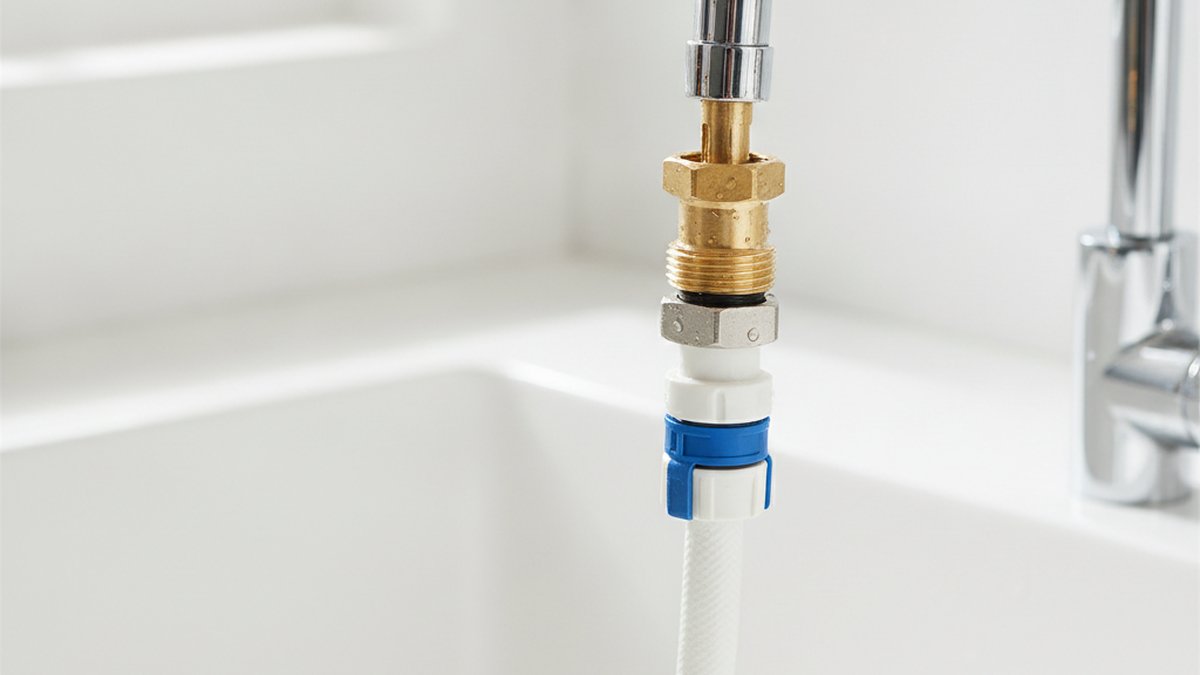
If you’ve ever tried to connect a portable washing machine, a countertop dishwasher, or a temporary utility hose to your sink, you already know the frustration: the hose end and the faucet end simply don’t speak the same language. The fix is a faucet adapter for washing machine hose — a small brass or plastic fitting that unscrews your faucet’s aerator and gives you a garden-hose thread the machine’s inlet hose can grip. It sounds trivial, but the wrong size or the wrong material is exactly why so many of these connections drip, spray, or blow off under pressure. This guide walks you through the exact thread sizes, materials, and valves that matter, so you buy once and connect right the first time.
What exactly is a faucet adapter for a washing machine hose?
It’s a two-sided threaded coupler. One side matches your faucet’s spout threads (where the aerator screws in), and the other side matches your washing machine hose — almost always a ¾-inch garden-hose thread (GHT). In plain terms, the adapter is a translator between “faucet language” and “hose language.”
Here’s the part that trips people up: your faucet aerator has its own threads, and those come in male and female versions and in a couple of standard diameters. Portable and compact washing machines (and most countertop dishwashers) ship with a quick-connect coupler designed to snap onto a GHT faucet adapter. So the adapter is the bridge, and the whole connection only works if the faucet side of that bridge matches your specific tap.
If you’re new to how aerators thread on and off, it’s worth understanding the component first — our explainer on the faucet aerator Neoperl upgrade covers the exact thread standards you’ll be measuring, and those same numbers decide which washing machine adapter fits.
How do I know which thread size my faucet needs — male or female?
Unscrew your aerator and look at where the threads sit. If the threads are on the outside of the faucet spout (the aerator screwed on over them), you have male faucet threads and you need a female adapter. If the threads are inside the spout tip (the aerator screwed up into them), you have female faucet threads and need a male adapter. That single check saves most people a return trip.
The two dominant sizes in North American kitchen and bathroom faucets are:
- Male 15/16″-27 — the most common outside-thread standard on kitchen faucets.
- Female 55/64″-27 — the most common inside-thread standard.
- Male 13/16″-24 — frequent on bathroom lav faucets (smaller).
- Female 3/4″-27 — a smaller inside-thread size seen on some compact taps.
The washing-machine side is far simpler: it’s almost universally ¾”-11.5 GHT, the same thread as a garden hose. That’s why many adapters are marketed as “faucet-to-garden-hose” adapters — a washing machine inlet hose and a garden hose share the same female coupler. A “dual-thread” adapter that offers both 55/64″ female and 15/16″ male on one end is the safest single purchase if you’re not 100% sure what you have.
One caveat: some pull-down or pull-out kitchen sprayers have a non-standard or hidden thread and can’t accept a screw-on adapter at all. If you have a pull-down spray head, plan to connect at a different tap, or use a base-of-faucet or under-sink tee instead.
Brass or plastic — which faucet adapter should I actually buy?
Buy brass if the connection will carry any real pressure or stay on for more than a few uses. Plastic adapters are fine for a one-off, low-pressure fill, but the threads strip easily, they crack in cold utility rooms, and the flat sealing face deforms — which is the number-one cause of the slow drip that puddles behind a portable washer.
Solid brass (ideally lead-free / low-lead brass rated for potable water) resists cross-threading, tolerates the vibration a running washer sends up the hose, and reseals reliably every time you disconnect. If you’re connecting and disconnecting weekly for a portable machine, brass pays for itself quickly. The trade-off is price — a good brass adapter runs a few dollars more — and that’s genuinely all you’re weighing here.
| Adapter type | Best for | Pressure tolerance | Typical lifespan | Approx. price |
|---|---|---|---|---|
| Solid brass, dual-thread | Regular portable washer/dishwasher use | High — handles full mains pressure | 5+ years | $8–$15 |
| Chrome-plated brass | Visible kitchen tap, occasional use | High | 5+ years | $10–$18 |
| Plastic / nylon | One-time or emergency fill | Low–medium; can crack | Months | $3–$6 |
| Brass with built-in shut-off valve | Leaving the machine connected long-term | High | 5+ years | $14–$25 |
Whichever you choose, always seat a fresh rubber washer inside the female GHT coupler. That flat washer — not the threads — is what actually seals the joint. A missing, hardened, or doubled-up washer is the real reason a “leaking adapter” leaks. Never fix a weep by cranking the fitting harder; you’ll crush the washer and make it worse.
Do I need a shut-off valve or a non-return valve on the adapter?
Yes, if you’re leaving the machine hooked up between uses. A shut-off valve on the adapter lets you kill the water at the faucet without reaching behind the appliance, and — more importantly — it protects against the burst-hose flood that happens when an inlet hose is left pressurized 24/7. Portable-washer hoses are the single most common household water-damage claim, precisely because people leave them under constant mains pressure.
Two valve features worth understanding:
- Shut-off (isolation) valve: a lever or wheel on the adapter that stops flow. Turn it off between washes and the hose downstream isn’t holding pressure. Cheap insurance against a burst hose.
- Non-return (check / anti-siphon) valve: prevents dirty water from the machine siphoning back into your drinking-water supply if the mains pressure ever drops. Many plumbing codes require backflow protection for exactly this reason — a hose sitting in a machine full of detergent water is a textbook cross-connection.
For a genuinely permanent laundry setup you’re better off moving away from a screw-on faucet adapter entirely and installing a proper laundry tap or a dedicated valve. If that’s where you’re heading, our guide to the laundry faucet mounting block for a utility sink explains how to give the machine its own supply so you’re not tying up your kitchen sink every wash day.
How do I install a faucet adapter for a washing machine hose step by step?
You can do this in under five minutes with no tools if the threads match — the whole job is unscrew, screw on, hand-tighten, test. Here’s the reliable sequence:
- Turn off the tap and unscrew the existing aerator counter-clockwise (from your view looking up). If it’s stuck with mineral crust, wrap it in a cloth and use pliers gently, or soak it in vinegar first.
- Check the threads — inside vs. outside — and confirm your adapter matches. Keep the aerator somewhere safe; you’ll want it back when the machine’s gone.
- Seat the rubber washer in the faucet side of the adapter, then hand-thread the adapter onto the faucet clockwise. Snug it firmly by hand; add a quarter-turn with pliers only if it weeps.
- Attach the washing machine hose coupler (the female GHT quick-connect) onto the adapter’s hose thread, with its own washer in place.
- Turn the water on slowly and watch every joint for 30 seconds. A steady drip means a missing or crushed washer, not “not tight enough.” Reseat the washer.
- Run the machine’s fill cycle and check once more under real flow and vibration.
A quick note on thread sealant: on tapered pipe threads you’d use PTFE tape, but garden-hose and aerator threads are straight threads that seal on the washer face — so tape usually isn’t needed and can actually stop the washer from seating properly. If a straight-thread joint won’t seal, replace the washer before you reach for the tape.
Why does my washing machine adapter keep leaking or spraying?
Nine times out of ten it’s the washer, the thread match, or debris on the sealing face — not the adapter itself being “bad.” Work through these in order:
- Crushed or missing washer: pop the coupler off and inspect. A flattened, cracked, or absent washer weeps every time. Replace it — they cost pennies.
- Cross-threaded start: if the adapter went on crooked, the threads never fully engaged. Back it all the way off and restart by hand, turning counter-clockwise first until you feel the threads “drop,” then clockwise.
- Wrong thread size forced together: a 55/64″ coupler bullied onto 15/16″ threads will grab a couple of turns and then leak forever. Confirm the size.
- Grit on the sealing face: mineral flakes from a crusty faucet sit under the washer and hold the joint open. Wipe both faces clean. If your tap is heavily scaled, our walkthrough on cleaning sink faucet head buildup shows how to clear the crust so the adapter can actually seat.
- Spraying from the spout itself: that’s usually back-pressure from a pull-down sprayer or a partly blocked aerator seat — a sign your faucet isn’t a good candidate and you should feed the machine from a different tap.
Can I leave my washing machine connected to the faucet permanently — or is it just for portables?
A screw-on faucet adapter is designed for portable and temporary connections, not a set-and-forget permanent install. It’s ideal for apartment portable washers, RVs, countertop dishwashers, and utility fills. For a full-size machine that lives in one spot, the better long-term answer is dedicated hot/cold laundry valves and a longer, braided supply line rated for constant pressure.
If your machine sits a little far from the tap, don’t solve it by chaining cheap hoses — get one correctly-rated supply line at the right length. Our comparison of the 48-inch faucet supply line covers when a longer braided line makes sense and how burst pressure ratings actually differ, which matters far more on a line that stays pressurized than on a portable’s occasional fill.
The rule of thumb: portable and occasional use → faucet adapter; permanent full-size machine → dedicated valves and rated supply lines. Using an adapter as a permanent solution is exactly the setup that floods laundry rooms.
How is this different from other faucet adapters, like a water-filter adapter?
The threads and the goal differ. A washing machine adapter converts to a ¾” garden-hose thread for a high-flow appliance fill; a water-filter or purifier adapter usually converts to a smaller diverter fitting so filtered and unfiltered water can share the tap. They’re not interchangeable, and buying the wrong category is a common mistake when people just search “faucet adapter.”
If your real goal is attaching a filter rather than an appliance, the matching guide for a Xiaomi faucet adapter to connect a Mi water filter shows how those diverter-style adapters work and why they use a different thread and flow path than the GHT washing-machine coupler described here. Same faucet, completely different fitting.
What should I look for on the spec sheet before I buy?
Match four things and you’re done: faucet thread size, hose thread (GHT ¾”), material (brass), and whether it includes a washer and valve. Here’s a quick buying checklist:
- Faucet thread: dual-thread (55/64″ female + 15/16″ male) is the most forgiving.
- Hose thread: ¾”-11.5 GHT — confirm it’s stated, not assumed.
- Material: solid brass, lead-free / potable-water rated.
- Included washers: at least one, ideally spares.
- Valve option: integrated shut-off if the machine stays connected.
- Certification: look for NSF/ANSI 61 or a WaterSense/local potable-water rating if the adapter touches drinking water.
At vevetta we bench-test our brass adapters for thread engagement and seal integrity at full residential mains pressure (up to 80 psi) before they ship, and we back the brass fittings with a limited lifetime warranty against thread and casting defects. That testing is why we push people toward brass over plastic — we’ve watched the plastic ones fail in the lab, not just in reviews.
FAQ
Will a garden hose adapter work for my washing machine?
Yes — a washing machine inlet hose and a garden hose use the same ¾” GHT coupler, so a faucet-to-garden-hose adapter is exactly what a portable washer needs. Just make sure the faucet side of the adapter matches your aerator threads and that a rubber washer is seated in the coupler.
What size is a standard faucet aerator thread?
The two most common are male 15/16″-27 (threads on the outside of the spout) and female 55/64″-27 (threads inside the spout tip). Bathroom faucets often use a smaller male 13/16″-24. Unscrew your aerator and check whether the threads are inside or outside to know which adapter you need.
Do I need Teflon tape on a washing machine faucet adapter?
Usually no. Aerator and garden-hose threads are straight threads that seal on a flat rubber washer, not on the threads themselves, so PTFE tape isn’t required and can actually prevent the washer from seating. Replace the washer before trying tape if a joint won’t seal.
Why does my portable washer adapter leak even when it’s tight?
Over-tightening is often the cause — it crushes the washer that’s supposed to seal the joint. Back the coupler off, inspect the washer for cracks or flattening, replace it, wipe both sealing faces clean of grit, and hand-tighten only until snug.
Can I connect a portable dishwasher with the same adapter?
Generally yes. Most countertop and portable dishwashers use the same GHT quick-connect coupler as portable washers, so the same brass faucet adapter works. Confirm your dishwasher’s coupler is ¾” GHT and that your faucet isn’t a pull-down sprayer, which can’t accept a screw-on adapter.
Is it safe to leave a portable washing machine connected to the tap all the time?
It’s not recommended. Screw-on adapters are meant for temporary use, and leaving an inlet hose pressurized around the clock risks a burst-hose flood. If you must leave it connected, use an adapter with an integrated shut-off valve and turn the water off between washes, or install dedicated laundry valves for a permanent setup.
Author note: This guide was written by the vevetta fixtures team, drawing on hands-on installation and bench testing of faucet adapters, aerators, and supply lines across common North American thread standards. vevetta designs and tests faucet fittings and bathroom fixtures, and every brass adapter referenced here is pressure- and seal-tested before sale and backed by our limited lifetime warranty on casting and thread defects. Always follow your local plumbing code for backflow protection when connecting appliances to a potable-water tap.